19 Jun 2025
Tập đoàn Xingang giành Huy chương Vàng tại Triển lãm Phát minh Quốc tế Geneva
Tìm hiểu thêm >


Oak block furniture board is often selected when a furniture project needs a balance of natural wood appearance, structural rigidity, machining performance, and a more engineered level of dimensional consistency than solid oak alone can provide. The key point, however, is that the performance of an oak block furniture board is determined by more than the oak surface. Core construction, wood moisture content, strip geometry, bonding quality, panel thickness, and surface configuration all influence how the board behaves after cutting, machining, assembly, and long-term use.
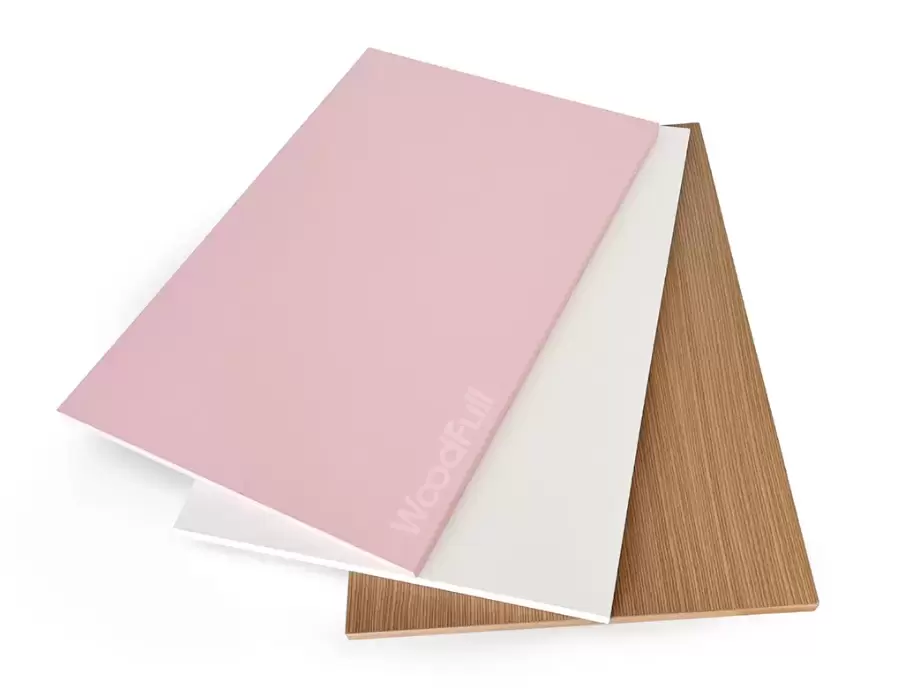
For furniture manufacturers working with wardrobes, cabinets, shelving, tables, doors, wall units, and other case goods, the practical question is not simply whether the board contains oak. It is whether the complete panel structure can maintain dimensional stability, provide reliable screw holding, support repeated machining, and deliver a consistent surface after finishing. Blockboard products generally use solid wood strips arranged edge-to-edge between veneer or surface layers, with the core construction playing a major role in panel stability and fastening performance.
The basic construction of a block furniture board consists of narrow solid-wood strips assembled into a core and combined with face and back layers. This construction differs from MDF, particleboard, and conventional plywood because the central material contains longitudinal solid-wood elements rather than a homogeneous fiber or particle matrix.
For furniture applications, this creates several engineering consequences. Fasteners can interact directly with solid wood fibers in the core, which is useful for hinges, drawer hardware, shelf supports, connecting screws, and other mechanical fittings. At the same time, the face layers help distribute stresses and reduce the dimensional movement that would occur if a thick solid-wood panel were used without engineered stabilization.
The quality of those individual strips therefore becomes a critical manufacturing variable. Variations in strip width, moisture content, grain direction, knots, cracks, or internal defects can produce differences in local stiffness and movement. Current blockboard specifications commonly identify core strip quality, moisture control, bonding, and panel flatness as key quality factors.
For an oak block furniture board, the construction should therefore be evaluated as a system rather than by the oak species alone.
Oak is a dense hardwood with a distinctive grain and strong visual identity, but using oak throughout the entire panel is not always the most efficient engineering solution. Depending on the board design, oak may be used as a decorative face, structural strip material, or part of a multilayer construction.
A lighter wood core can reduce panel weight while the oak surface provides the desired appearance. A denser core can increase local screw-holding capability and resistance to mechanical loading but may increase weight and machining forces.
This distinction becomes important when producing large furniture components. A 2440 × 1220 mm panel used for a wardrobe side, long shelf, table component, or cabinet door can become difficult to handle if density increases significantly. Published blockboard specifications commonly show density ranges around 420–600 kg/m³ depending on core species and construction, illustrating why material selection should be connected to the intended application rather than treated as a simple “harder is better” decision.
For example, a large wardrobe panel may prioritize weight control and dimensional stability, while a table component with concentrated fasteners may require greater local strength. The same oak block furniture board specification does not necessarily suit both applications.
Wood movement begins with moisture exchange. When a wood-based panel enters a new environment, the wood continuously responds to relative humidity and temperature. If the core is manufactured with excessive or inconsistent moisture content, the board may continue to shrink or expand after installation.
This can result in bowing, edge movement, surface telegraphing, veneer separation, or changes in the dimensions of machined components. For furniture manufacturing, these problems are especially visible after CNC cutting because a small dimensional change in the raw panel can become an alignment problem in the finished product.
Export-oriented blockboard specifications commonly control core moisture in approximately the 8–12% range, although the correct target depends on wood species, manufacturing conditions, and destination environment.
Vấn đề quan trọng không chỉ đơn giản là đạt được con số mục tiêu một lần. Sự thay đổi độ ẩm trong một mẻ và giữa lớp lõi và lớp bề mặt cũng là vấn đề quan trọng. Nếu các lớp khác nhau được ép với điều kiện độ ẩm khác nhau đáng kể, ứng suất bên trong có thể phát triển khi tấm cân bằng.
Do đó, đối với ván nội thất khối gỗ sồi dành cho sản xuất đồ nội thất ở nước ngoài, việc kiểm soát độ ẩm phải được liên kết với khí hậu nơi đến, điều kiện bảo quản, phương pháp vận chuyển và môi trường lắp đặt cuối cùng.
Chiều rộng dải lõi là một thông số khác đáng được quan tâm.
Các dải hẹp hơn tạo ra nhiều khớp nối hơn trong lõi và có thể giúp phân phối chuyển động cục bộ. Dải rộng hơn có thể làm giảm độ phức tạp lắp ráp và chi phí xử lý vật liệu, nhưng các phần gỗ riêng lẻ lớn hơn có thể tạo ra chuyển động theo chiều rõ ràng hơn khi độ ẩm thay đổi.
Một số thông số kỹ thuật của ván khối dành cho đồ nội thất sử dụng dải lõi trong phạm vi khoảng 20–40 mm, mặc dù chiều rộng thích hợp phụ thuộc vào cấu trúc và ứng dụng của ván.
Đối với một tấm ván nội thất bằng khối gỗ sồi có bề mặt trang trí mỏng, chiều rộng của dải trở nên đặc biệt quan trọng vì sự chuyển động hoặc sự không đồng đều trong lõi cuối cùng có thể truyền tín hiệu qua bề mặt. Điều này đặc biệt có vấn đề đối với lớp hoàn thiện có độ bóng cao, lớp veneer mỏng, đồ nội thất được sơn và cửa phẳng lớn, nơi ngay cả những bất thường trên bề mặt nhỏ cũng có thể trở nên rõ ràng.
Do đó, cấu trúc dải nhất quán có giá trị hơn là chỉ xác định chiều rộng dải danh nghĩa mà không kiểm soát dung sai sản xuất.
Bảng mạch phải duy trì tính toàn vẹn về cấu trúc thông qua nhiều giao diện: giữa các dải lõi, giữa lớp lõi và lớp băng chéo, cũng như giữa lớp bề mặt và chất nền.
Việc sử dụng chất kết dính không đầy đủ hoặc không nhất quán có thể tạo ra các điểm yếu cục bộ. Mặt khác, chất kết dính dư thừa không tự động có nghĩa là liên kết mạnh hơn và có thể cản trở các điều kiện ép, di chuyển độ ẩm hoặc chất lượng bề mặt.
Sản xuất ván ép thường kết hợp ứng dụng kết dính được kiểm soát với áp suất và nhiệt độ trong quá trình ép. Kiểm soát chất lượng thường tập trung vào độ bền liên kết, độ phẳng bề mặt, độ ẩm và tính toàn vẹn bên trong.
Đối với các thành phần đồ nội thất sẽ được tải nhiều lần hoặc được lắp ráp cơ học, chất lượng liên kết trở nên đặc biệt quan trọng xung quanh các khu vực được gia công. Việc cắt một tấm sẽ làm lộ cấu trúc bên trong của nó và có thể nhìn thấy các vùng liên kết kém trong quá trình định tuyến, khoan, tạo rãnh hoặc xử lý cạnh.
Độ dày phải được xác định bởi vai trò cấu trúc của tấm ván thay vì sử dụng một độ dày trên toàn bộ chương trình nội thất.
Tấm 18 mm được sử dụng rộng rãi cho khung tủ, giá đỡ, cửa và các bộ phận nội thất nói chung, trong khi tấm dày hơn có thể thích hợp cho các nhịp dài, kệ nặng, kết cấu bàn và các bộ phận cần độ sâu gia công bổ sung. Thông số kỹ thuật của blockboard thương mại thường bao gồm 15 mm, 18 mm, 25 mm và độ dày tùy chỉnh khác.
Mối quan hệ giữa độ dày và nhịp đặc biệt quan trọng đối với kệ dài. Việc tăng độ dày làm tăng đáng kể độ cứng uốn, trong khi chỉ cần chọn vật liệu dày đặc hơn có thể tăng thêm trọng lượng mà không giải quyết được hình dạng của bộ phận.
Đối với sản xuất đồ nội thất CNC, dung sai độ dày cũng rất quan trọng. Nếu độ dày danh nghĩa là 18 mm nhưng tấm thực tế thay đổi đáng kể trên tấm, thì độ sâu rãnh, vị trí đầu nối, dải cạnh và dung sai lắp ráp đều có thể bị ảnh hưởng.
Một tấm ván nội thất bằng khối gỗ sồi cuối cùng có thể được phủ veneer tự nhiên, melamine, HPL, sơn, lớp phủ UV hoặc một loại hoàn thiện trang trí khác. Do đó, chất nền phải cung cấp điều kiện bề mặt chính xác cho quá trình hoàn thiện đã chọn.
Chà nhám không đồng đều, chuyển động của lõi, khiếm khuyết về chất kết dính hoặc sự thay đổi độ dày của lớp mặt có thể xuất hiện sau khi phủ, ngay cả khi tấm thô ban đầu trông có vẻ chấp nhận được.
Ví dụ, cửa tủ sơn đòi hỏi mức độ đồng nhất bề mặt khác với kệ bên trong được phủ một lớp laminate mờ đục. Do đó, chương trình nội thất nên chỉ định loại bề mặt theo độ hoàn thiện cuối cùng thay vì áp dụng một tiêu chuẩn thẩm mỹ cho mọi bộ phận.
Vật liệu này đặc biệt phù hợp khi ứng dụng yêu cầu sự kết hợp giữa đặc tính gỗ tự nhiên, trọng lượng có thể quản lý được, hiệu suất giữ vít, khả năng gia công và độ ổn định của bảng điều khiển.
Thân tủ quần áo có thể được hưởng lợi từ cấu trúc lõi gỗ nguyên khối xung quanh bản lề và đầu nối. Kệ dài có thể được hưởng lợi từ độ cứng của kết cấu bảng điều khiển được thiết kế. Các thành phần của bảng có thể sử dụng cấu hình dày hơn khi cần có khả năng chống uốn lớn hơn. Cửa trang trí có thể kết hợp vẻ ngoài bằng gỗ sồi với chất nền được thiết kế có kiểm soát hơn.
Cấu trúc chính xác vẫn phải phù hợp với các yêu cầu về tải trọng, nhịp, độ ẩm, kiểu gia công, độ hoàn thiện bề mặt và yêu cầu buộc chặt.
Shandong Xingang Group Co., Ltd. tập trung vào các công nghệ vật liệu gỗ định hướng môi trường và đã phát triển Keo mô phỏng sinh học Xingang cho các ứng dụng bao gồm ván trang trí, ván ép siêu mỏng và ván ép biển mô phỏng sinh học.
The company's stated adhesive technology is designed around zero formaldehyde, zero benzene, and zero harmful substances, with the broader objective of developing healthier and more sustainable wood-based materials. For furniture applications, this approach can be incorporated into the material-selection discussion alongside core construction, bonding performance, moisture control, and surface requirements.
For an oak block furniture board, the adhesive system should not be evaluated independently from the panel. Bond-line performance, emission requirements, processing conditions, and long-term dimensional behavior need to be considered together.
A reliable oak block furniture board specification should go beyond “oak board” and define the parameters that actually determine manufacturing performance. These can include panel thickness and tolerance, core species, strip dimensions, moisture range, face and back construction, adhesive system, bonding requirements, surface grade, density, flatness, emission requirements, and applicable certification.
This approach reduces the risk of receiving visually similar boards with materially different processing behavior.
For furniture manufacturers, the value of an oak block furniture board is ultimately determined by what happens after the panel leaves the factory: whether it remains stable during transportation, machines consistently, holds hardware securely, accepts its intended finish, and maintains dimensional performance in the finished furniture. Controlling the core structure, moisture, bonding system, and surface construction provides a more reliable path to consistent furniture production.