

15 Oct 2026
Ban nội thất hình tròn: Lựa chọn tấm phát thải thấp cho nội thất
Tìm hiểu thêm >


The quality of a color MDF board is determined by more than its final color. Substrate preparation, fiber distribution, adhesive performance, hot pressing, surface treatment, and finishing control all contribute to the finished panel's appearance and functional properties. For manufacturers serving furniture, cabinetry, and interior decoration markets, a stable production process is essential for maintaining consistent quality across different orders and production batches.
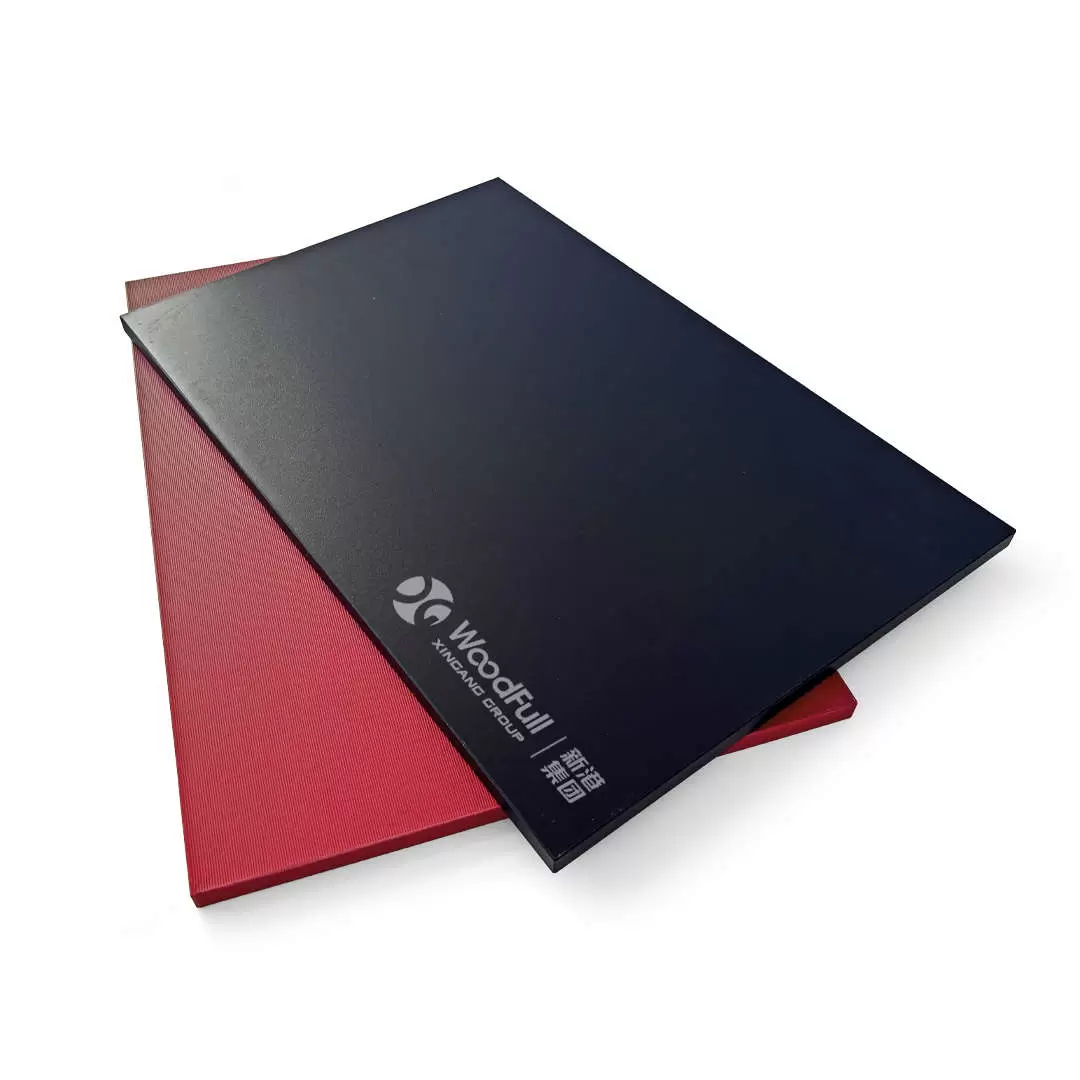
Understanding how color MDF board is manufactured helps buyers evaluate suppliers more effectively. It also provides a clearer basis for identifying potential quality risks before panels enter downstream cutting, drilling, lamination, or furniture assembly operations.
MDF production begins with wood fiber preparation. The quality and consistency of the fibers influence the internal structure of the finished panel. Fiber dimensions, moisture content, and distribution must be controlled to support uniform board formation.
After fiber preparation, adhesive is introduced to bind the fibers together. The adhesive system influences internal bonding, dimensional stability, and emissions performance. Its compatibility with the manufacturing process is particularly important because variations in adhesive distribution can lead to inconsistent panel properties.
The forming process then distributes the treated fibers into a mat with the required weight and dimensions. Uniform mat formation is important for controlling density distribution and final thickness. Uneven fiber distribution may contribute to differences in mechanical performance across the panel.
For color MDF board production, a stable substrate provides the foundation for subsequent surface processing. Even a visually attractive finish cannot fully compensate for poor internal bonding or inconsistent board structure.
Hot pressing consolidates the fiber mat into a rigid panel under controlled temperature and pressure. During this stage, heat activates the adhesive system, while pressure establishes the required board thickness and density.
The pressing parameters must be matched to fiber characteristics, adhesive formulation, panel thickness, and production speed. Excessive or insufficient processing can affect internal bonding, surface quality, and dimensional stability.
Density is another important production variable. The overall density of an MDF panel affects its weight, stiffness, machining behavior, and fastener performance. However, the density profile through the board thickness is also relevant. A uniform and appropriate density structure supports more predictable cutting and surface treatment.
After pressing, panels generally undergo conditioning and further processing to stabilize their properties and prepare them for finishing. Sanding may be used to improve surface flatness and create a consistent foundation for decorative treatment.
The decorative process determines the visible appearance of color MDF board. Depending on the product construction, the color may be achieved through surface coating, decorative facing, or other specialized finishing methods.
Each approach has different requirements.
A coated surface requires appropriate preparation, coating compatibility, and controlled application conditions. Film thickness, curing conditions, and surface cleanliness can affect gloss, adhesion, and visual consistency.
A decorative facing requires reliable bonding between the facing material and the MDF substrate. Adhesive compatibility, pressing conditions, and surface preparation influence whether the finished surface remains stable during storage, machining, and use.
Color control is especially important in large-volume production. Pigment formulation, coating conditions, material batches, and curing processes can all contribute to color variation. Manufacturers should establish reference samples and inspection procedures to maintain consistency.
The selected finish should also reflect the intended application. A matte surface, for example, has different visual and maintenance characteristics from a high-gloss finish. Surface hardness, scratch resistance, stain resistance, and cleaning compatibility should be assessed according to the final environment.
A color MDF board may look acceptable at a distance but still contain defects that become visible during furniture production or installation. Common issues include scratches, bubbles, pinholes, uneven gloss, color variation, edge damage, and surface contamination.
These defects can originate at different stages. Substrate irregularities may affect coating uniformity, while dust or contamination can interfere with surface adhesion. Improper handling and packaging may also cause scratches after production.
Hệ thống kiểm tra thực tế phải bao gồm kiểm tra trực quan dưới ánh sáng được kiểm soát, đo kích thước, độ đồng nhất của độ dày, hình dáng bề mặt và các thử nghiệm liên kết có liên quan. Trong trường hợp sản phẩm yêu cầu các đặc tính độ bền cụ thể, cần tiến hành thử nghiệm bổ sung theo ứng dụng dự định.
Thử nghiệm cơ học của chất nền MDF có thể bao gồm độ bền liên kết bên trong, đặc tính uốn và hiệu suất rút vít. Đối với các ứng dụng nhạy cảm với độ ẩm, thử nghiệm độ trương nở và độ hấp thụ nước cũng có thể phù hợp.
Kiểm tra bề mặt nên được lựa chọn theo yêu cầu hoàn thiện và thị trường. Các thử nghiệm mài mòn, vết xước, vết bẩn và độ bám dính có thể cung cấp thông tin hữu ích, nhưng phương pháp thử nghiệm có thể áp dụng và tiêu chí chấp nhận phải được thống nhất trước khi sản xuất.
Công nghệ kết dính ảnh hưởng đến cả hiệu suất kết cấu và đặc tính môi trường của các tấm gỗ. Công thức, phương pháp ứng dụng, đặc tính xử lý và khả năng tương thích với vật liệu sợi đều ảnh hưởng đến độ ổn định trong sản xuất.
Shandong Xingang Group Co., Ltd. đã phát triển chất kết dính mô phỏng sinh học Xingang, được công ty mô tả là không chứa formaldehyde, không benzen và không chứa các chất độc hại. Chất kết dính này đã được áp dụng thành công trên quy mô lớn trong các tấm trang trí mô phỏng sinh học Xingang, MDF siêu mỏng và ván ép biển mô phỏng sinh học.
Sự phát triển này phản ánh sự tập trung của công ty vào các vật liệu làm từ gỗ thân thiện với môi trường. Tuy nhiên, đối với việc sản xuất ván MDF màu, sự phù hợp của một loại keo cụ thể phải được đánh giá liên quan đến chất nền thực tế, quy trình trang trí và hiệu suất thành phẩm được yêu cầu.
Các tuyên bố về môi trường cũng phải được hỗ trợ bởi tài liệu dành riêng cho sản phẩm. Người mua nên yêu cầu báo cáo kiểm tra khí thải có liên quan và xác minh xem sản phẩm được kiểm tra có tương ứng với cấu trúc bảng điều khiển chính xác đang được mua hay không.
Giá trị của ván MDF màu trở nên rõ ràng khi nó được đưa vào sản xuất ở khâu sau. Một tấm có độ dày và mật độ phù hợp sẽ dễ dàng xử lý hơn thông qua định tuyến CNC, khoan, gia công cạnh và lắp ráp đồ nội thất.
Độ bền bề mặt cũng quan trọng không kém. Nếu lớp hoàn thiện trang trí dễ bị trầy xước hoặc liên kết kém thì hư hỏng có thể xảy ra trong quá trình cắt, đóng gói, vận chuyển hoặc lắp đặt. Màng bảo vệ và quy trình xử lý thích hợp có thể giúp giảm thiểu những rủi ro này.
Đối với các dự án nội thất theo yêu cầu, sản xuất mẫu là một cách hiệu quả để đánh giá toàn bộ quy trình. Một tấm thử nghiệm có thể được cắt, khoan, hoàn thiện cạnh, lắp ráp và kiểm tra trước khi xuất xưởng một đơn đặt hàng lớn hơn.
A dependable supplier should be able to explain the panel structure, production process, quality inspection methods, and product-specific technical specifications. Buyers should confirm the available dimensions, thickness range, color options, finish types, production tolerances, and packaging standards.
It is also important to understand how the manufacturer controls batch consistency. Approved samples, production records, inspection reports, and clear acceptance criteria can reduce disputes when orders are delivered over multiple shipments.
Color MDF board manufacturing requires coordinated control of substrate formation, adhesive performance, pressing, decorative treatment, and final inspection. When these stages are managed as one integrated process, the resulting panels are better positioned to meet the appearance and processing requirements of modern furniture and interior applications.


